


















Discover our agri-food clients
The agri-food industry represents a very significant part of the global economy. This sector encompasses all activities related to the processing, distribution, and marketing of agricultural products (fruits, vegetables, etc.), livestock products (meat, milk, etc.), fisheries products (fish, seafood, etc.), as well as forestry products. Food products are characterized by their sensitivity to temperature, their limited shelf life, and their regulatory requirements.
Agri-food logistics: complex needs
Health standards
Handling food products requires strict adherence to hygiene standards to prevent contamination. Therefore, cleaning protocols, disinfection of storage and transport facilities, and staff training are essential elements that must not be overlooked to guarantee food safety.


Cold chain management
Many food products, such as fruits, vegetables, meats, and dairy products, must be stored at specific temperatures to preserve their freshness and nutritional value . Warehouse movement, delivery routes, and constant monitoring of storage conditions—all these aspects must be controlled and optimized. Indeed, any break in the cold chain, for example, can lead to losses and compromise food safety.
Product traceability
Food logistics is synonymous with product traceability . This traceability must be complete, from the source to the end consumer. This notably involves the documentation and precise tracking of product movements, from production to distribution. Technologies such as RFID tags and centralized information systems like a WMS play a key role in tracking product batches.
Agri-food logistics: what are the challenges?
The agri-food industry is particularly complex on several levels. In a world where hygiene, food safety and environmental issues have become paramount, agri-food logistics must meet the challenges of its entire supply chain.
Food security
Food safety is a prerequisite in agri-food logistics. Indeed, contamination incidents can have serious consequences, including product recalls, financial losses, and damage to a company's reputation. Implementing rigorous quality control, combined with complete traceability, minimizes these risks and guarantees safe products for consumers.


Reducing food waste
According to the UN, the world wastes 30% of the food produced each year. This staggering figure represents a significant concern, both economically and environmentally. In this context, optimized inventory management, including monitoring expiration dates , not only reduces waste but also improvesprofitability. Solutions like Warehouse Management Systems (WMS) help to record all customer and supplier information and adjust stock levels accordingly, thus minimizing losses.
Optimizing logistics costs
Reducing transportation and storage costs is a constant objective in order toimprove profit margins. Furthermore, optimizing these costs involves improvingthe efficiency of logistics processes, consolidating shipments, and using a management solution such as a WMS (Warehouse Management System). It should be noted that effective logistics planning also allows for a reduction in energy and fuel costs.


Adaptability and flexibility
Fluctuations in demand, seasonal variations , and changing consumer preferences necessitate a high degree of flexibility in the supply chain. Businesses must be able to adapt quickly to these changes to maintain business continuity and meet customer expectations.
The role of WMS in agri-food logistics
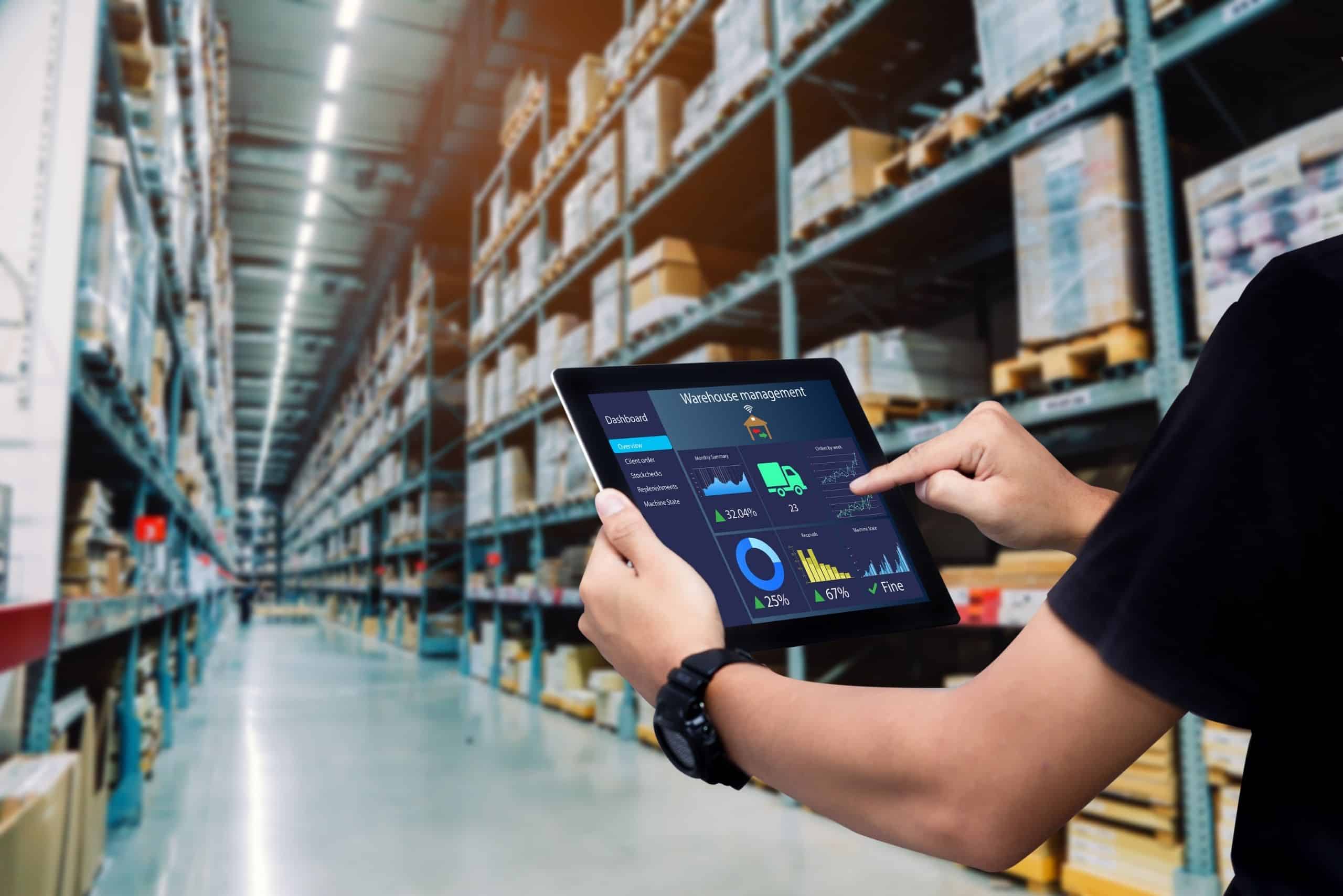
A warehouse management system (WMS) is a true partner in optimizing food logistics. Indeed, a WMS improves inventory management and ensures traceability and food safety. It also plays a significant role in reducing logistics costs while increasing operational efficiency. Offering high adaptability and flexibility thanks to its scalability, the WMS helps food companies proactively address logistical challenges and maintain high standards of quality and safety. It is a strategic investment for any company wishing to optimize its logistics operations and strengthen its market competitiveness.

Why use EGO WMS?
Developed by logistics professionals for logistics professionals, our inventory management solution, WMS EGO, benefits from over 35 years of evolution and adaptation. Our WMS EGO software enables, among other things:
- Complete management of expiry constraints: Contract Date per customer, FIFO, FEFO, blocking, management of sales deadlines, entry deadline…
- Individual tracking of each item with its own properties: Batch, manufacturing date, composition…
- Managing booking prioritization rules,
- A reminder of the batches in one click with the sending of an email to all the customers concerned.
B2C
No posts found for this term.
Book a free demo
Contact us to book your EGO WMS demo
Ready to find out how we convinced more than 580 customers to optimize their logistics with EGO WMS?
Please fill in these fields
to book a demo