


















Mastering the last mile from the warehouse: The winning duo of WMS and TMS
WMS software
Logistics
Supply Chain
October 17, 2025
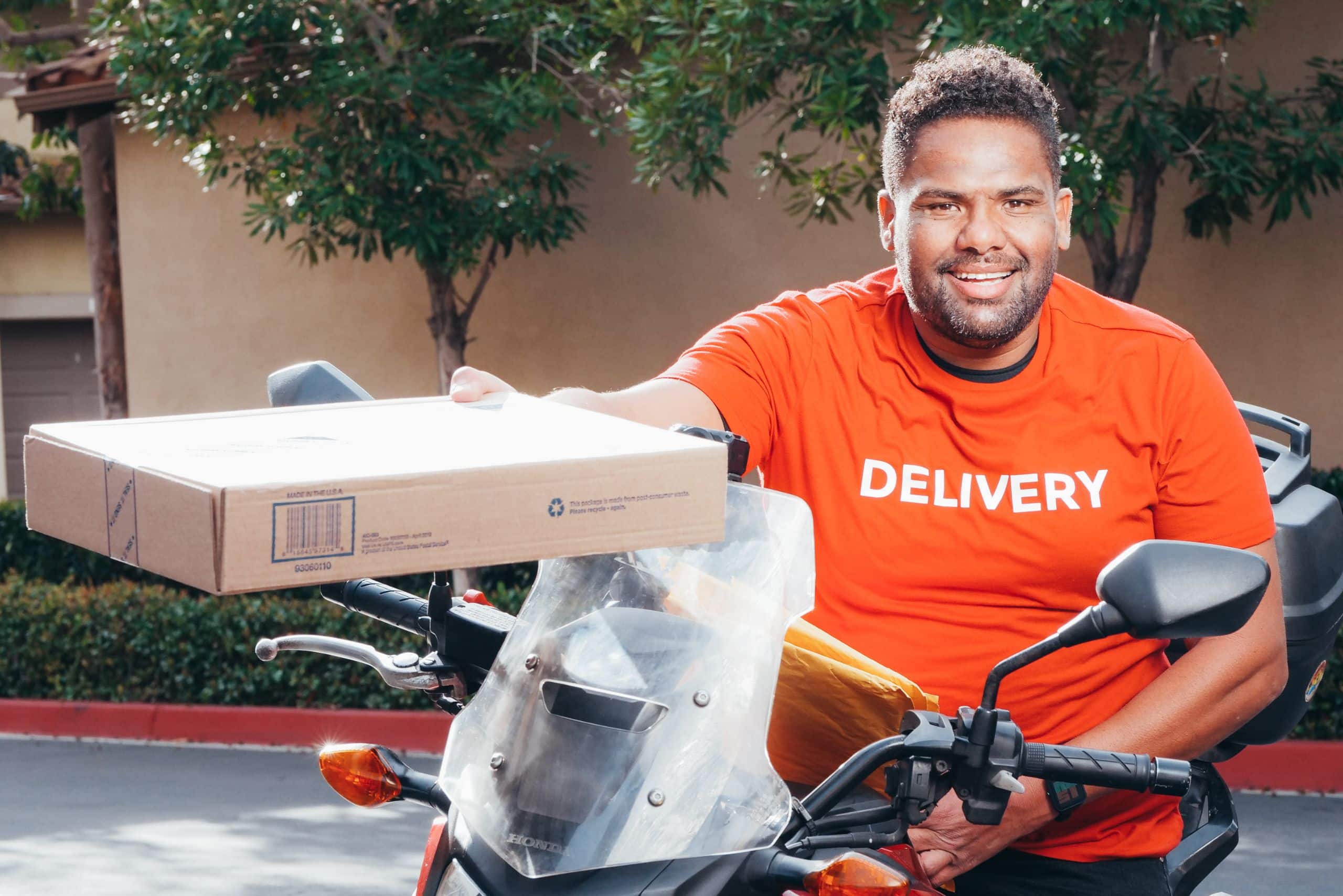
The last mile… These few words resonate with particular intensity in the mind of every supply chain professional. It's the final sprint, the last stage of a product's journey. But it's also, by far, the most expensive, most complex, and most decisive stage for the customer experience.
Did you know that this final portion of the logistics flow can consume up to 53% of the total shipping cost? A colossal figure.
For years, attention has focused on optimizing the carrier, the delivery vehicle, and the urban route. What if we're looking in the wrong place? What if the real key to revolutionizing the last mile isn't on the road, but upstream, within the four walls of your warehouse?
The truth is this : last-mile delivery will never be faster, more accurate, or more cost-effective than the order preparation that precedes it. It's a value chain, and every link counts.
This article delves into the heart of the logistics engine. We'll explore how seamless synergy between your warehouse management system (WMS) and transport management system (TMS) transforms this operational challenge into a decisive competitive advantage. We'll also explore the concept of micro-fulfillment to bring inventory closer to the customer and push the boundaries of efficiency.
Get ready to rethink your approach. The last mile starts here.
The last mile: much more than just a delivery
Before diving into solutions, we must grasp the magnitude of the stakes. The last mile is no longer a simple delivery transaction; it has become a battleground for customer loyalty.
Definition: the last stage of the supply chain
The "last mile" refers to the final stage of the delivery process, the one that transports a package from its last storage point – whether it be a central warehouse, a distribution hub or a store – to its final destination: the customer.
This is the moment of truth, the single point of physical contact between your brand and your customer. A successful experience builds trust. A failed experience, even if everything else in the process was perfect, can wipe out months of marketing efforts.
The major challenges that weigh on your profitability and your reputation
Why is this step so notoriously complex and expensive? Several factors combine to create a storm of logistical challenges.
The exorbitant cost : The 53% figure is often cited for good reason. Unlike long-haul transport, where thousands of packages are consolidated into a single truck, the last mile involves numerous one-off stops for individual deliveries. Each stop represents time, fuel, and labor costs that add up exponentially.
The pressure of customer expectations: The standard imposed, particularly by e-commerce giants, has redefined expectations. Customers demand everything, and they want it now.
- Speed: Same day or next day delivery is no longer a luxury, but a basic expectation.
- Note: The delivery window must be respected to the minute.
- Flexibility: The ability to change the delivery address or time at the last minute is increasingly in demand.
- Transparency: The customer wants real-time traceability of their order, from the warehouse delivery dock to their door.
Urban constraints: Delivering in city centers is a daily headache. Traffic jams, emissions regulations, traffic restrictions, parking difficulties… Each factor adds delays and unforeseen costs to transport management.
The ecological imperative: Consumer environmental awareness is growing rapidly. An increasing number of them are favoring companies that demonstrate a commitment to sustainable logistics. The last mile, with its often polluting fleet of vehicles, is under intense scrutiny. Reducing one's carbon footprint is no longer just a matter of image; it's a business imperative.
Faced with these challenges, how can we turn this Achilles' heel into a strength? The answer lies in a comprehensive approach that begins long before the package is loaded onto the truck.
The warehouse: the starting point for any last-mile optimization
Thinking about optimizing the last mile by focusing solely on transportation is like trying to win a Formula 1 race with a poorly prepared car in the pits. No matter how skilled the driver, defeat is inevitable. Your warehouse is your pit. It's where the race is won or lost.
Why is warehouse performance non-negotiable?
Every minute saved, every error avoided during the receipt of goods, storage management, and especially order preparation, has a direct and measurable impact on the last mile.
Imagine this scenario : an operator wastes 5 minutes searching for a product due to poor inventory management. The package is delayed. The carrier has to reorganize their route. The delivery is missed. The customer is unhappy. The package has to be redelivered. Costs skyrocket. It's a domino effect.
To break this cycle, two technological tools are at the heart of the strategy:
- The WMS (Warehouse Management System) : This is the brain that orchestrates all internal warehouse operations, from inventory management to picking.
- TMS (Transport Management System) software : This is the strategist who plans, executes and optimizes the physical movement of goods out of the warehouse.
The secret lies not in one or the other, but in their perfect symbiosis.
The central role of WMS software in order preparation
Warehouse management software is much more than just a simple inventory management tool. It's a true conductor that optimizes every micro-process.
Optimized picking for speed and accuracy: Picking, or collecting items for an order, often accounts for more than 50% of a warehouse's operating costs. High-performance WMS software transforms this repetitive task into an exact science. It calculates the shortest paths for operators, intelligently groups orders, and guides teams via mobile devices to minimize movement and errors. Integrating poka-yoke principles (error-proofing mechanisms) into the WMS process ensures that the correct product is picked every time.
Intelligent packing and palletizing: Once the items are collected, the WMS continues to manage operations. It can suggest the optimal packaging size to reduce volumetric transport costs (packing). For larger orders, it organizes palletization to ensure stability and optimize space in the truck. In more complex operations such as co-packing (grouping different products in the same pack), the WMS guarantees compliance.
Real-time inventory management : The cornerstone of all warehouse logistics. A WMS solution ensures perfect visibility into stock levels at all times. This accuracy prevents stockouts that frustrate customers and overstocking that ties up your capital. It guarantees that what is ordered online is actually available and ready to ship.
Smooth management of peak activity periods : Sales, Black Friday, end-of-year holidays… These activity peaks can bring any warehouse to its knees. A robust WMS allows you to absorb these surges by streamlining logistics flows, dynamically allocating resources, and maintaining a high level of productivity without sacrificing accuracy.
Checklist: Prepare your warehouse for a seamless last mile
To transform your warehouse into a real asset for your last mile, here are some concrete actions to implement.
- Audit your current processes: Map each step of your order preparation. Identify bottlenecks, time-consuming manual tasks, and sources of recurring errors.
- Evaluate your WMS capabilities: Is your current WMS software up to the task? Does it offer advanced picking strategies (wave-based, zone-based)? Can it handle complex processes like cross-docking? Examine the WMS features that could directly accelerate last-mile preparation.
- Implement error-proofing mechanisms: Use poka-yoke principles. This can involve systematically scanning barcodes at each stage, automated weight checks, or "pick-to-light" systems that visually guide operators.
- Strive for perfection in inventory management: Implement regular counting cycles and use your inventory management to analyze discrepancies and correct their root causes. The accuracy of your inventory is non-negotiable.
Perfect synchronization: when TMS and WMS work together
Having an efficient warehouse is the first half. Winning the last-mile battle requires seamless coordination with transportation. This is where integration between the WMS and TMS becomes the key success factor.
Think of your TMS and WMS as a pilot-co-pilot duo. The WMS prepares the aircraft (the package) perfectly, ensuring everything is correct and ready on time. The TMS, on the other hand, plots the most efficient flight plan to reach the destination quickly and safely. One without the other is ineffective.
From the validated order to the loading of the truck
Within an optimized system, communication between the two solutions is instantaneous and bidirectional.
- Downward flow of information (TMS to WMS): The TMS software plans a delivery route. It can inform the WMS of the exact arrival time of the truck and, most importantly, the order in which the packages must be loaded to respect the route order (the "last in, first out" or LIFO principle).
- Upward information (WMS to TMS): As soon as order preparation is complete, the WMS software transmits valuable information to the TMS: the exact weight and dimensions of the final package, its availability on the delivery dock, and confirmation that the order is complete and correct.
This constant dialogue helps to maintain a dynamic and responsive logistics flow.
The art of data-driven sorting, grouping, and labeling
This WMS/TMS synchronization enhances three critical processes that take place just before loading:
- Route-based sorting: Guided by information from the TMS, the WMS can direct operators to sort packages not by order, but directly by delivery route. This results in significant time and handling savings.
- Consolidation (grouping): If the same recipient is expecting multiple packages, the WMS signals this so they can be grouped into a single shipment. This consolidation maximizes space in the vehicle and simplifies the driver's job.
- Smart labeling: The shipping label is no longer just a sticker with an address. Generated at the right time, it becomes a condensed version of logistical intelligence. It contains the tracking barcode, specific delivery instructions, and, most importantly, a sequencing code for the delivery route. The delivery driver simply scans the packages in order to optimize their route.
Optimize loading and routing using real-time data
The TMS no longer relies on weight or volume estimates, but on real data. It can thus fill each truck to its full capacity, reducing the number of vehicles on the road. It can also recalculate routes in real time based on traffic or new collections, knowing exactly what is ready to be loaded at the warehouse.
This synergy even allows for advanced strategies such as cross-docking. In this model, goods arriving from a supplier (goods receipt) are barely, if at all, stored. Thanks to the combined information from the WMS and TMS, they are immediately sorted, consolidated, and assigned to a delivery truck, which then goes directly from the receiving area to the loading dock.
Revolutionizing proximity: new urban warehouse strategies
Even with the most optimized WMS/TMS pairing, one physical law remains unavoidable: distance. Delivering a package from a warehouse 50 km from the city will always take longer and be more expensive than delivering it from a point 5 km away. A new generation of logistics infrastructure has emerged to address this issue.
The concept of the “micro-fulfillment center” (MFC): logistics at the heart of cities
A micro-fulfillment center is exactly what its name suggests: a warehouse strategically located in the heart of urban areas. It can be a small commercial space, the back room of a store ("dark store"), or even a repurposed space in an underground parking lot.
Their purpose is not to replace large central warehouses, but to complement them. MFCs stock a narrower assortment of products, typically the fastest-moving items (the "best sellers").
The benefits are spectacular for the last mile:
- Drastic reduction in delivery distances: The final journey is measured in a few kilometers, or even a few hundred meters.
- Ultra-fast delivery: Delivery times of 1 to 2 hours become an operational reality.
- Reduced transport costs: Less fuel, less travel time, and the possibility of using smaller and more environmentally friendly vehicles (cargo bikes, electric scooters).
- Optimized inventory management: Storage management is more agile, aligned with local demand in real time.
Warehouse automation: the driving force behind MFCs
How can such efficiency be achieved in such a confined space? Through warehouse automation.
MFCs rely heavily on automated storage and retrieval systems (AS/RS), autonomous shuttles, and AMR/AGV robots. Warehouse automation enables the processing of high volumes of orders quickly and with near-perfect accuracy, all within a minimal floor space.
A Warehouse Management System is, once again, the brain that drives all this machinery, orchestrating the movements of the robots and the management of inventory.
Checklist: Should you consider urban warehousing?
Adopting an MFC is a truly strategic decision, and it's only natural that many questions arise. Here are some to ask yourself.
- Analyze the geography of your orders: Where are your most loyal customers located? Identify areas with high order density that could justify an advanced storage point.
- Evaluate the opportunity cost: Calculate the current cost of the last mile in these densely populated areas (in terms of transportation, delays, and customer satisfaction). Compare this cost to the investment required for a Mobile Customer Flow (MCF).
- Explore automation technologies: Learn about warehouse automation solutions. Are they suitable for your product type and order volume?
- Assess your information system's capacity: Is your WMS software capable of managing a network of multiple warehouses? Can it orchestrate the flow between a central warehouse and several MFCs seamlessly?
Your last mile is a competitive advantage waiting to be activated
The last mile is not inevitable. It shouldn't be a cost center to be endured. It's a strategic opportunity to differentiate yourself, build customer loyalty, and create an admired brand.
As we have seen, the key to this transformation does not lie in a miracle solution, but in a systemic approach that places the warehouse at the beginning of everything.
- The performance of order preparation, driven by WMS software, is an essential prerequisite. Accuracy, speed, and internal efficiency are the foundations of successful external delivery.
- Real-time synchronization between the WMS and TMS is the catalyst that transforms two high-performing systems into a unified logistics force. It enables route optimization, maximizes truck capacity, and makes the entire logistics flow more agile.
- Proximity strategies, such as micro-fulfillment centers, represent the future of urban logistics, made possible by warehouse automation and good software management.
Don't ignore your warehouse's role in the last-mile equation. By orchestrating the perfect synergy between your internal operations and transportation strategies, you're not just delivering a product. You're delivering a promise. And in today's retail world, that's what makes all the difference.
So, ready to turn your last mile into a decisive competitive advantage?
Contact us for an audit of your logistics flow and discover how our WMS solution can revolutionize your supply chain.
FAQ: Everything you need to know about the Last Mile
What is the difference between a WMS and a TMS?
Think of it this way: the WMS (Warehouse Management System) manages everything that happens inside the warehouse walls (storage, inventory, picking, packing). The TMS (Transport Management System) takes over to manage everything that happens outside the walls, once the package is ready (route planning, carrier selection, delivery tracking). They are complementary, and their integration is crucial.
Why is the last mile so expensive?
Its high cost (up to 53% of total costs) stems from its low density. A long-haul truck transports thousands of packages between two points, diluting costs. The last mile, on the other hand, involves numerous stops to deliver one or two packages at a time, multiplying labor, fuel, and time costs per package.
Is a micro-fulfillment center (MFC) suitable for all businesses?
No, not necessarily. An MFC is particularly relevant for businesses with a high order density in specific urban areas and for fast-moving products. For a business with a geographically dispersed customer base, the investment may not be profitable. A detailed analysis of sales data is essential before launching.
How does real-time traceability improve customer experience?
Real-time tracking meets a fundamental customer need: control and visibility. Knowing exactly where your package is and when it will arrive reduces anxiety, increases brand trust, and empowers customers to plan ahead. It's a proactive communication tool that transforms passive waiting into a positive, interactive experience.
What is the very first step to optimizing my last mile?
The first step is internal. Before even thinking about changing carriers or TMS software, analyze your warehouse's performance. Measure your order preparation cycle time, your picking error rate, and the reliability of your inventory management. Optimizing these indicators with powerful WMS software is the action that will have the most immediate and significant impact on your last mile.