




















Successfully manage your docks: Eliminate bottlenecks in your supply chain
WMS software
Logistics
Supply Chain
November 28, 2025
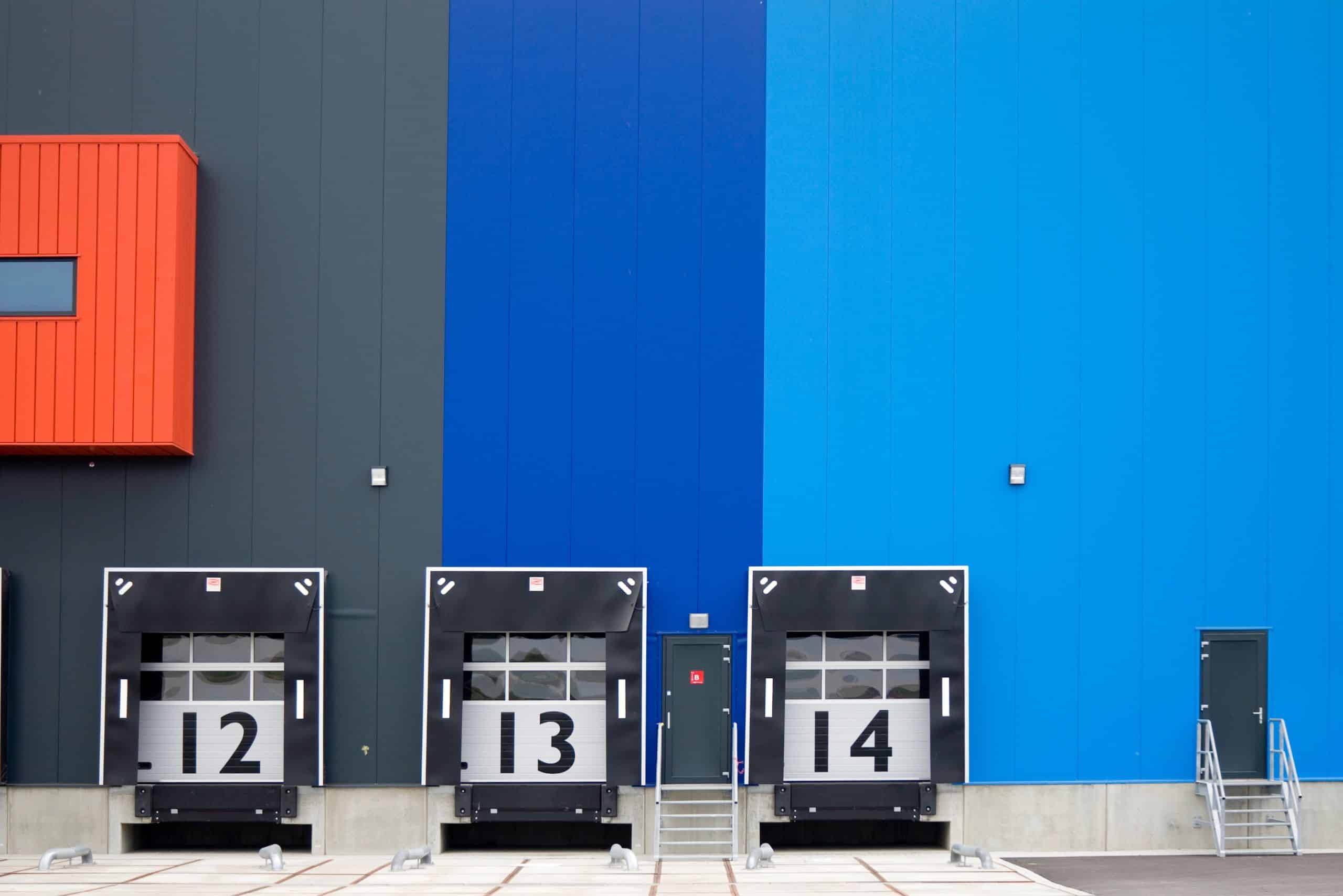
The dock… This beating heart and pressure point of your logistics.
Yes, the loading/delivery dock is often a hive of activity, a central hub in the supply chain.
Yet, paradoxically, it's one of the most underestimated, even neglected, links in logistics.
Did you know that poor dock management can lead to unexpected costs and seriously damage your warehouse's overall performance? This is a reality that directly impacts inventory turnover, order picking, and ultimately, customer satisfaction and your profitability.
In this article, we provide in-depth expertise to transform this point of friction into a real competitive advantage. We'll break down the pitfalls, explore technological solutions like WMS software equipped with YMS functionality, and give you the keys to seamless logistics flow management.
The hidden costs of poor dock management: Delays, overloads, and disputes
Think about it for a moment: how much does it really cost you to have a truck waiting two, three, or even four hours at your loading/unloading dock?
The myth of a "normal wait" masks painful financial realities. Poor management of logistics flows at the docks generates a cascade of problems, from delays that impact the entire supply chain to disputes with carriers.
Direct and indirect financial losses
- Carrier late penalties and waiting fees (or downtime) : A truck waiting to arrive at the dock is costly. Carriers often apply fees (compensation for late loading/unloading), often called "untangling fees" or "detention fees," which unnecessarily strain the budget.
- Overload and poorly managed peak periods : During peak periods , without adequate planning, human and material resources ( forklifts , forklift operators) risk being misallocated. This leads to inefficiency in picking, packing, or co-packing and increases the risk of errors when receiving goods.
- Deterioration of the customer/supplier relationship : Delays in receiving goods impact order processing and, consequently, delivery times. Poor logistics damage the company's reputation and can lead to disputes.
- Poor inventory and storage management . Disorganized unloading leads to poor storage organization and management. If goods are not quickly assigned to their location (via slotting or the ABC method), they clog up transit areas.
Operational risk and loss of control
Chaos at the docks is fertile ground for operational inefficiency.
- Cross-docking difficulties : If you practice cross-docking (the rapid transfer of goods from a receiving dock to a shipping dock), the slightest delay in receiving derails the entire shipping schedule.
- Safety issues : A cluttered and high-pressure environment increases the risk of accidents. The implementation of error-proofing processes (poka-yoke) is compromised if staff are constantly in "firefighting" mode.
- Storage sub-optimization : Inefficient receiving delays the placement of goods in the appropriate management areas, disrupting the entire warehouse strategy. For example, if you use the ABC method for product classification, it becomes impossible to apply in the case of poorly managed loading docks.
Checklist: Diagnosing a failing dock management system
To assess the situation of your docks, ask yourself the following questions:
- Do your carriers consistently respect appointment times?
- What is the average waiting time for a truck between its arrival in the yard and its departure from the loading dock?
- Is information regarding the nature of the goods (number of SKUs, palletization) known before the arrival of the carrier?
- Are you able to dynamically reallocate resources (forklift operators, reception staff) in case of unforeseen circumstances?
- Do you have real-time visibility on the availability of dock doors?
The functionalities of a dock management module (YMS) and its integration with the WMS
How can we regain control of this critical area? Faced with these challenges, digitalization is the obvious and effective solution. The first step in this optimization lies in adopting a YMS (Yard Management System) module, whose role is to regulate traffic in the yard and around the loading docks.
In the overall management of a warehouse, the YMS is a key partner to the WMS ( Warehouse Management System ).
The YMS: Warehouse Yard Manager
YMS is a feature of a WMS solution whose mission is to extend its field of vision beyond the warehouse walls, towards the yard and the docks.
Its main objective is to coordinate the movement of vehicles, trailers, and drivers . In this way, it ensures the traceability of equipment and goods within the yard. It provides a dynamic view of the status of the docks and the location of trailers.
While a standard WMS solution manages the internal processes ( picking , order preparation, inventory management), YMS focuses on the efficiency of the entry and exit point :
- Door and dock management : It allows the dynamic allocation of available delivery docks, thus optimizing the use of this space.
- Trailer tracking: The YMS maintains an accurate inventory of trailers in the yard, their contents (via integration with WMS software) and their status (loading, waiting, ready to go).
- Priority rules. It allows you to define rules based on the urgency of loads, for example for cross-docking operations which require speed of execution.
WMS-YMS Integration: The Winning Duo for Logistics Flow
Maximum efficiency is achieved when YMS is fully integrated with WMS software, such as our EGO WMS solution .
The logistics flow begins with arrival planning in the YMS and continues seamlessly in the WMS for storage management and internal processing.
- Before arrival: Order data (quantities, SKU type) from the WMS or ERP is transmitted to the YMS. The YMS can then anticipate human resource needs and plan the best location for receiving goods or loading.
- Upon arrival: The YMS guides the driver, records the arrival time, and assigns them to the dock. This information is immediately transmitted to the WMS, which can then initiate order preparation for outgoing loads, thus reducing waiting times.
- Special operations: For cross-docking – where goods are transferred directly from an incoming trailer to an outgoing trailer without going through storage – integration is a real advantage. The YMS ensures that both trailers are at the dock at the right time, while the WMS manages the traceability and execution of the transfer task.
The role of TMS in the ecosystem
The Transport Management System (TMS), or transport management software, plays a role both upstream and downstream. It ensures route optimization, particularly for the last mile . By connecting to the YMS module, the TMS can inform the carrier of any delays or advances in the schedule, allowing the YMS to readjust dock planning.
This trio (WMS – YMS – TMS) is the key to an and digital supply chain
Scheduling and appointment booking: Best practices for streamlining carrier traffic
The key to efficient dock management lies in planning. Without it, you're doomed to suffer from peak activity and congestion. Carriers can no longer simply arrive haphazardly.
Dock Scheduling: The Art of the Time Window
Dock scheduling is one of the most impactful WMS functionalities
It allows carriers to schedule online appointments for delivery or collection.
- Balance the workload: Distribute operations throughout the day to avoid peak activity and congestion.
- Regulating the influx: The system automatically assigns a specific time slot and dock, taking into account constraints (type of goods, estimated unloading/loading time, available resources).
- Prioritizing flows. It is possible to prioritize certain types of flows, such as returns logistics (returns management) or cross-docking, which require faster turnover.
- Optimize resources: Allocate human and material resources (forklifts, palletizing or co-packing personnel) according to the expected volume.
According to the trade magazine Supply Chain Info , companies that have adopted an integrated Dock Scheduling System have seen an average reduction of 25% in truck waiting time on site.
Checklist: Implementing effective dock planning
- Define capacities: Establish the maximum processing capacity per hour and per dock, taking into account resources (staff, equipment).
- Standardize times: Measure and standardize average times for key operations (receiving goods, standard loading, cross-docking).
- Prioritization rules: Configure rules in the system to prioritize urgent or strategic flows.
- Integrating the WMS: The system must automatically block slots if the goods to be loaded (for shipping) or the resources to be unloaded (for receiving) are not ready.
- Set up an alert system: Inform carriers in case of delays in their time slot, allowing them to adjust before arriving.
- Train the carriers: Ensure that the carriers are trained to use the appointment booking portal.
Court management in action
Once the carrier arrives on site, the YMS module takes over to guide the vehicle. It's the equivalent of an air traffic control center for your logistics yard.
- Quick check-in : The driver checks in (often via an automated kiosk connected to the warehouse management software).
- Dynamic dock assignment : The YMS assigns the most suitable dock in real time, taking into account priorities and current occupancy.
- Guidance and safety : The system can use geolocation devices to track trailers and ensure they are parked in designated areas, increasing safety.
- Trailer management at rest : The YMS manages the inventory of trailers parked in the yard, essential for load planning and ensuring stock rotation.*
The warehouse of the future and automation
Optimizing the docks is fully in line with the vision of the warehouse of the future.
Integrating WMS software with warehouse automation (such as AGVs or automated sorting systems) ensures that time saved at receiving is not lost in internal processing.
The ultimate goal is to minimize the time between receiving goods at the dock and putting them into storage or transporting them to the order preparation area.
The Quay: A lever for performance and customer experience
Dock management is no longer simply a matter of vehicle scheduling; it's a true strategic lever for the overall performance of your supply chain.
By adopting a WMS solution equipped with YMS functionality, you not only eliminate bottlenecks but also transform downtime costs into savings and invest in the speed, reliability, and security of your organization. This, in turn, provides a better experience for your carriers and ultimately, your customers. As
you can see, the race to the warehouse of the future is largely won on the docks.
So, ready to transform your docks into precision machines? Take action!
Contact us for a personalized assessment of your logistics flows and discover how a modular WMS platform like our EGO solution can optimize your loading docks and your entire supply chain.
FAQ: Everything you need to know about dock management integrated with WMS
What is the difference between a YMS and a WMS?
warehouse management software that focuses on operations inside the warehouse, such as inventory management, picking, slotting, order preparation, and storage. A Yard Management System (YMS) is a complementary system, usually a module integrated with the WMS, that manages the flow of goods outside and in the immediate vicinity of the warehouse: trailers, drivers, loading docks, and loading bays.
Does the management of returns have an impact on the management of the docks?
Absolutely. Returns logistics require a dedicated goods receiving area and specific dock processes. A good YMS allows you to plan and isolate these flows so they don't disrupt standard delivery flows. It can also pre-notify the WMS software when returned goods arrive, allowing the returns team to prepare.
How does the integration between WMS and TMS logistics impact the docks?
The WMS informs the TMS when orders are ready for shipment (order picking complete). The TMS then schedules the transport and communicates the estimated time of arrival (ETA) to the YMS/Dock Scheduling System. This information allows the correct dock to be allocated at the right time, facilitates cross-docking, and optimizes last-mile delivery.
Most read articles
WMS software
Logistics
Supply Chain
July 3, 2024
Inventory management using WMS software
To master your inventory management, it is imperative to use suitable and efficient inventory management software. With this automation, you can monitor the status of your inventory in real time, allowing you to make informed and rapid decisions to avoid stock-outs or overstocks.
Logistics
Supply Chain
June 10, 2024
Reverse logistics: our management of product returns
Reverse logistics, or reverse logistics, is a management process that focuses on returning products from the consumer to the manufacturer or distributor.
WMS software
Logistics
September 20, 2024
How much does a WMS cost?
The price of a WMS (Warehouse Management System) can vary considerably, ranging from €25,000 to €250,000 (or more) for its acquisition. The cost of WMS software depends on many factors, including the required features, the size of the warehouse, and the complexity of logistics operations.