





















How are Micro-Fulfillment Centers revolutionizing urban delivery in less than 2 hours?
WMS software
Logistics
4.0 solutions
Supply Chain
January 9, 2026
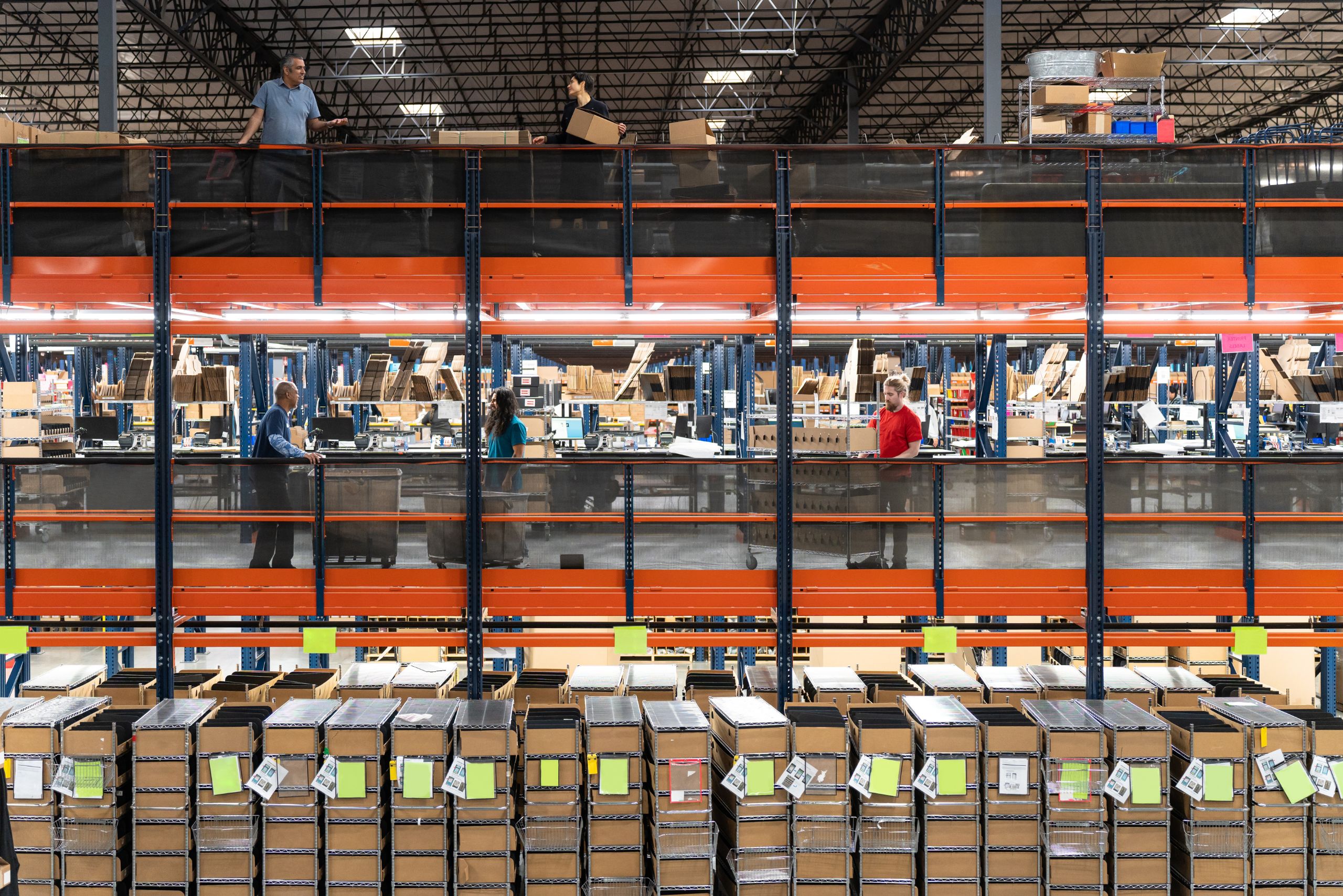
The era when consumers were willing to wait three days to receive their packages now belongs to the prehistory of e-commerce.
Today, the battle is fought down to the minute.
Have you noticed how the demand for immediacy has transformed our urban landscapes?
The challenge for any supply chain manager today is no longer just to store, but to position the product as close as possible to the end customer.
A silent revolution has taken place over the years and transformed logistics: Micro-Fulfillment Centers (MFCs ). Automated mini-warehouses, installed in the heart of urban areas.
Imagine a warehouse of 200 to 500 m² capable of storing up to 10,000 items and preparing 800 to 1,000 orders per day , nestled in the back room of a supermarket or in the basement of a commercial building.
Pretty crazy, but how do these companies manage to deliver in less than 2 hours?
Let's explore together how Micro-Fulfillment Centers are reinventing urban logistics, what technologies are propelling them, and how WMS software can seamlessly orchestrate a hybrid network of central warehouses and MFCs.
The urban logistics revolution: When the warehouse moves to the city
For decades, the classic strategy was to build huge platforms on the outskirts of major cities.
But faced with the explosion of e-commerce and the congestion of city centers, this model is reaching its limits, especially for the last few kilometers.
What is a Micro-Fulfillment Center?
A Micro-Fulfillment Center is a compact logistics warehouse, generally with an area of between 100 and 1,000 m², located as close as possible to urban consumption areas.
Unlike huge distribution centers that can cover 50,000 m² or more, MFCs prioritize geographical proximity and speed of execution.
These facilities combine two distinctive features that differentiate them from traditional warehouses.
- A strategic location : MFCs are setting up directly in dense urban areas, sometimes in the back rooms of existing stores, in basements, or converted commercial spaces, to reduce delivery distances.
- An operational specialization : MFCs focus primarily on omnichannel order preparation and rapid delivery, particularly for fresh food products, everyday consumer goods, and urgent orders.
From an economic perspective, the global MFC market is expected to experience explosive growth, rising from $724 million in 2020 to over $6 billion by 2026, with an annual growth rate of 42%. This strongly reflects a profound transformation of supply chains.
Dark stores and urban warehouses: two faces of MFC
The concept of "Micro-Fulfillment" covers several implementation formats that share the same philosophy of proximity.
Dark stores represent the most common form of MFC. These are former physical stores optimized exclusively for picking and preparation . Closed to the public, these spaces maximize every square meter for storage, without the constraints of traditional retail layout.
Integrated urban warehouses represent a different approach. In this model, the MFC is installed directly in the back office or basement of an existing store. This hybrid configuration allows for serving both in-store customers and online orders from the same infrastructure.
In both configurations, the challenge is simple: to transform every square meter into a profit center capable of handling just-in-time flows.
This proximity not only reduces the carbon footprint, but also allows for a smoother of peak activity
Why is the traditional model no longer sufficient?
- The explosion of online grocery shopping: This is the main driver of this transformation. Then, the COVID-19 pandemic accelerated a transition that had already begun: consumers now regularly buy their groceries online and expect fast delivery, often on the same day.
- Expectations for faster delivery are constantly increasing. Mobile fuel cells (MFCs) provide a solution by reducing the final stage of delivery from several tens of kilometers to just a few hundred meters.
- Environmental and regulatory constraints are also driving this model. Low-emission zones are proliferating in European cities, restricting the circulation of internal combustion engine vehicles. Short-distance deliveries from mobile freight hubs can be made using light electric vehicles, cargo bikes, or even on foot.
- Supply chain resilience : Rather than relying on a single centralized warehouse, retailers are deploying a network of smaller centers. This decentralization limits the impact of a breakdown, strike, or natural disaster on the entire logistics network.
Checklist: Evaluate the relevance of an MFC for your business
- Analyze the density of your orders by postal code.
- Identify the best-selling SKUs (stock keeping units) in urban areas.
- Calculate the current cost of your last mile.
- Assess the availability of "brownfield" real estate space in the city center.
MFC's specific technology: Compact robots and adapted WMS
Automation adapted to confined spaces
The efficiency of a Micro-Fulfillment Center is essentially based on its ability to maximize storage density and preparation speed in a small space.
This equation therefore requires automation technologies that can be used in compact urban environments.
Goods-to-man systems form the technological core of MFC. Unlike traditional picking where pickers move through aisles to collect items, these systems automatically bring products to operators via AMR/AGV robots or conveyors.
This reversal of the workflow multiplies productivity by 2 to 3 while reducing physical strain. The operator remains at their picking station while robots orchestrate the flow of goods.
The WMS at the heart of MFC responsiveness
Hardware automation, however sophisticated, only reaches its full potential when controlled by WMS ( Warehouse Management System ) software specifically adapted to the needs of Micro-Fulfillment Centers.
Among these needs, we find, among others:
- Real-time inventory management : Every minute counts when it comes to delivering fast. Warehouse management software must offer real-time traceability of every item, order, and robot, with instant visibility into available stock.
- Dynamic slotting : The system must continuously analyze turnover data to strategically position the most in-demand products in the most accessible locations. The idea is to automatically adjust the stock organization according to seasonal variations, promotions, or even the time of day.
- Simultaneous management of priorities : Online orders with express delivery, click & collect with precise collection times, and sometimes restocking of the adjacent store… The WMS software must intelligently arbitrate between these competing demands, taking into account promised deadlines, customer value, and the overall optimization of human and robotic resources.
- Integration with Transportation Management Systems (TMS): The WMS communicates in real time with the TMS software to efficiently group orders from the same geographic area and adjust picking priorities based on driver departures. This precise coordination reduces driver waiting times and optimizes last-mile delivery .
Dual management: How a WMS simultaneously manages a central warehouse and MFC
The orchestration of a hybrid logistics network
The establishment of Micro-Fulfillment Centers does not generally replace the existing central warehouse but creates a multi-level logistics network.
This hybrid architecture combines the massive storage capacity and logistics flow management of the main warehouse with the proximity and responsiveness of MFCs.
The distributed inventory strategy forms the basis of this approach. Not all products are suitable for storage in multi-factory warehouses. High-turnover items , fresh produce, and locally in-demand products naturally find their place in these warehouses .
Conversely, slow-moving products, bulky items, or specialized items remain centralized in the main warehouse, from where they can be shipped with longer but acceptable delivery times.
In this scenario, the WMS software must intelligently decide which item to store where, based on multiple criteria: rotation speed, value, size, temperature constraints, and specific local demand.
Inter-site flows: from the central office to the MFCs
The efficiency of an MFC network relies largely on the smooth flow of replenishments from the central warehouse.
- Predictive transfer planning relies on algorithms that analyze local consumption trends. The system anticipates the needs of each MFC several days in advance and schedules stock transfers accordingly. This proactive approach prevents stockouts in MFCs while minimizing costly overstocking in these premium spaces.
- Optimizing replenishment routes leverages the functionalities of a transportation management system (TMS). Transfers between the central warehouse and the MFC (Multi-Function Center) are ideally organized according to regular rotations, allowing for cost sharing. A single vehicle can replenish several MFCs during an optimized route, while also potentially picking up returns or excess stock for reallocation. Synchronization between the WMS and TMS ensures that the necessary goods are prepared and ready at the precise moment the vehicle departs.
- Exception and emergency management: When an MFC faces an unexpected demand for a product that is out of stock locally but available centrally, the system can trigger an express transfer or temporarily redirect orders to another MFC or to the central warehouse.
Essential WMS functionalities for multi-site management
Effectively managing a hybrid network of central warehouses and MFC requires specific WMS functionalities
- Native multi-site storage management : The goal? To manage multiple warehouses within a single software instance, with customizable management rules per site but centralized governance. Each MFC can have its own slotting parameters, automated equipment, and teams, while sharing product repository data and global business rules.
- Intelligent order sourcing : You can see in real time which location can prepare and deliver each order most efficiently. Optimization criteria include stock availability, distance to the customer, delivery cost, current site workload, and promised delivery times.
- Consolidated dashboards for analyzing network performance. Key performance indicators per site (service rate, productivity, costs), inter-site comparisons, bottleneck identification and proactive alerts enable strategic and operational management of the logistics network.
- Omnichannel returns management ( returns logistics ): An item purchased online from MFC A can be returned to a store served by MFC B. The system must track the movements, put the product back in stock in the correct place, and adjust the inventories of all sites involved.
- Scalability and flexibility: Your MFC network will evolve. You'll open new sites, close others, and test different automation technologies. A SaaS WMS solution typically offers superior agility to support this evolution, with regular updates incorporating the latest innovations and the ability to absorb seasonal activity spikes without additional hardware investment.
The measurable benefits of Micro-Fulfillment Centers
Drastic reduction in last-mile delivery costs
The last few miles traditionally account for 40 to 50% of the total delivery cost of an e-commerce order.
MFCs radically transform this economic equation. By bringing stock closer to within a few hundred meters or a few kilometers of the end customer , the average delivery distance drops from 30-50 km to 2-5 km.
This reduction in distance translates into savings on fuel, delivery time, and vehicle wear and tear. A delivery driver can make 30 to 40 deliveries per route from a multi-service center (MSC) compared to 15 to 20 from a remote warehouse , thus reducing delivery costs by 20 to 40% depending on the configuration.
Optimizing stock turnover and reducing stockouts
Paradoxically, decentralizing stock via MFCs improves the overall stock turnover of the retailer.
By placing the most frequently requested items locally in each MFC (Multi-Functional Center) , you concentrate your inventory on high-turnover products . These items are traded several times a day, minimizing capital tied up and reducing the risk of obsolescence. Consequently, stockouts, the e-commerce nightmare that generates customer frustration and lost sales, decrease significantly.
This replenishment agility would be impossible with remote warehouses. The ABC inventory classification method finds its ideal application here: A products (high turnover) in MFC, B and C products in central warehouses .
The challenges and constraints of Micro-Fulfillment Centers
The complex economic equation of MFCs
Despite their undeniable advantages, Micro-Fulfillment Centers pose economic challenges that must be anticipated lucidly.
- The initial investment : This is the main obstacle. Automation is expensive: an AMR or AGV robot system for a 400 m² MFC requires an investment of €1 to €3 million depending on the configuration and level of automation. Added to this are the costs of building renovation, WMS software integration, and staff training. Multiplying these investments across a network of 10 or 20 MFCs represents tens of millions of euros.
- Urban real estate costs : These costs are often underestimated. Renting or buying 300 to 500 m² in a dense urban area is exponentially more expensive than a suburban warehouse. In Paris, Lyon, or Marseille, urban logistics rents can reach €200 to €400/m²/year, compared to €50 to €80/m²/year in the suburbs . This difference impacts profitability and requires high order volumes to offset it.
- The break-even point in terms of daily orders varies depending on the configuration but is generally between 300 and 500 orders per day for an automated MFC. Below this threshold, fixed costs (rent, automation, personnel) are not properly amortized.
Regulatory and urban planning constraints
The establishment of MFC in urban areas sometimes encounters administrative obstacles.
operating permits can be complex. A robotic maintenance center (MFC) with 24/7 operation generates noise, delivery vehicle movements, and alters the use of a commercial building.
Local residents may object, local planning regulations may restrict certain uses, and administrative procedures can take several months. A regulatory feasibility study must precede any development project.
The local environmental impact must be considered and controlled from the outset. Even though MFCs contribute overall to reducing the carbon footprint, they concentrate local logistics activity that generates traffic, potential noise pollution (especially during nighttime operations), and energy consumption.
Local authorities can impose specific constraints (restricted delivery times, exclusive use of clean vehicles) which must be integrated into the operational model.
Perspectives: Towards the ultra-distributed warehouse
The evolution towards nano-fulfillment centers
The proximity logic initiated by MFCs is extending towards even more compact and distributed formats.
Nano -fulfillment centers , ranging from 50 to 100 square meters, are slowly emerging and are being integrated directly into gas stations, train stations, residential buildings, or neighborhood shopping centers. These ultra-compact facilities stock a few hundred priority items (convenience products, medications, snacks) and allow for customer pickup in just a few minutes .
The automation of these nano-centers relies on smart lockers, advanced vending machines, and miniaturized robotic picking systems. Management is entirely cloud-based, requiring no permanent human presence.
Artificial intelligence at the heart of the orchestration
The MFC networks of tomorrow will rely heavily on generative AI and machine learning to continuously optimize their performance.
- Demand forecasting will become more accurate, incorporating not only sales history but also weather data, local events (concerts, sporting events), social media trends, and even urban mobility data. This refined forecasting will enable predictive inventory positioning.
- Dynamic network optimization will adjust flows between sites in real time. AI will continuously analyze stock imbalances, available processing capacity, and order flows to automatically suggest stock reallocations or inter-MFC transfers.
The increasing integration of MFCs into the circular economy
Micro-Fulfillment Centers will not only be used for the delivery of new products but will be integrated into circular economy circuits and contribute to a sustainable supply chain .
- Deposit and reuse systems for packaging can rely on recycling centers as collection and redistribution points. Customers return their reusable packaging during deliveries or pickups; the recycling center cleans it or groups it for centralized cleaning, then reuses it for future orders.
- The second-hand and refurbished market will benefit from this infrastructure. MFCs can serve as drop-off points for used products that the retailer buys back, inspects, refurbishes, and resells locally.
Turning expectation into satisfaction: MFC as the new standard for customer loyalty
The Micro-Fulfillment Center is not just a passing trend; it is the logical evolution of a business that no longer knows temporal boundaries.
By bringing your stock closer to your customers, you not only save time: you gain their loyalty.
This revolution rests on three inseparable pillars: a strategic urban location that places the stock at the heart of consumption areas, automation technologies (AMR/AGV robots, conveyors) that maximize productivity in constrained spaces, and WMS software capable of harmoniously orchestrating a hybrid network of central warehouses and MFCs.
The measurable benefits accumulate:
- A 20 to 40% reduction in last-mile costs
- Improved customer experience with delivery times reduced by a factor of 10 or 20
- Optimizing inventory turnover,
And you, are you ready to transform your logistics to dominate the urban market?
Contact us for an audit of your logistics flow and discover how our EGO WMS solution can serve your MFC project.
FAQ: Everything you need to know about Micro-Fulfillment Centers
What differentiates a multi-functional facility (MCF) from a traditional warehouse?
The main difference lies in the size (much smaller) and the location (urban). While a traditional warehouse aims for economies of scale on large volumes, the MFC focuses on speed of execution for the last mile.
How much does it cost to set up an MFC?
The investment for an MFC varies considerably depending on size, level of automation, and location.
For an automated MFC (Multi-Functional Center) of 300 to 500 m² equipped with a robotic system, the initial investment is generally between 1 and 3 million euros. This amount includes automation equipment, building layout, WMS software integration, and staff training.
In addition to this, there are recurring costs: urban rent (often €200 to €400/m²/year in major cities), operating staff, maintenance of automated equipment, and energy. The break-even point is generally between 300 and 500 orders per day, depending on the specific configuration.
Which WMS software is suitable for managing an MFC network?
A WMS software capable of effectively managing an MFC network must possess several specific functionalities, among others.
- Multi-site management : Essential for simultaneously orchestrating the central warehouse and multiple MFCs with unified inventory visibility.
- Intelligent order sourcing: Automatically determine which site will prepare each order based on multiple criteria: availability, proximity, cost, lead time.
Most read articles
WMS software
Logistics
Supply Chain
July 3, 2024
Inventory management using WMS software
To master your inventory management, it is imperative to use suitable and efficient inventory management software. With this automation, you can monitor the status of your inventory in real time, allowing you to make informed and rapid decisions to avoid stock-outs or overstocks.
Logistics
Supply Chain
June 10, 2024
Reverse logistics: our management of product returns
Reverse logistics, or reverse logistics, is a management process that focuses on returning products from the consumer to the manufacturer or distributor.
WMS software
Logistics
September 20, 2024
How much does a WMS cost?
The price of a WMS (Warehouse Management System) can vary considerably, ranging from €25,000 to €250,000 (or more) for its acquisition. The cost of WMS software depends on many factors, including the required features, the size of the warehouse, and the complexity of logistics operations.